
Key data on the state of children in Texas, including the impact of trauma and abuse, child fatalities, numbers on the foster care system, paths to prevention, home visiting outcomes, and more.
Category: Uncategorized

The Economic Cost of Adverse Childhood Experiences (ACEs)
Prevalence of ACEs in Texas and the economic cost to the state if ACEs are not mitigated or prevented.
Urgent Action We Need to Take in the Face of Texas’ Child Protective Services Crisis
Statement from TexProtects CEO Sophie Phillips on urgent actions we need to take in the face of Texas’ Child Protective Services crisis May 10, 2021
For immediate release
Last week, a new report and a recent court hearing in the decades-long lawsuit against the foster care system in Texas, along with news of an increase in instances of children sleeping in CPS offices, demonstrated, once
again, that the foster care system in Texas has a long way to go to ensure
that children in state care are safe and well.
The new report by court-appointed monitors for state agencies in charge of the system revealed that 23 children died in the state’s care since July 2019, and many others experienced serious trauma. What some are calling a “foster care capacity” crisis has resulted in the use of unlicensed facilities, with 339 children sleeping at least one night in a CPS office since August 2020 and disrupted the stability and success in some regions where Community-Based Care is being implemented.
Despite meaningful improvement and progress by the Texas Department of Family and Protective Services (DFPS) and providers, continued challenges make clear that we desperately need a transformative change in
our child protection system.
A number of bills by the chairs of the Senate Health and Human Services Committee and the House Human Services committee look to do just that.
- SB 1896 by Sen. Kolkhorst and sponsored by Rep. Frank has passed the Senate and is being heard in House Human Services on May 11. This bill aims to address capacity issues and provide safe, higher quality placements, as well as better oversight and transparency.
- HB 567 by Rep. Frank and Sen. Hughes has already passed and has been sent to the Governor. This bill has a wide array of changes to the child protection system; all meant to keep families together and prevent removals, which will place less of a burden on the foster care system.
- SB 1575 by Sen. Kolkhorst and HB 4476 by Rep. Oliverson have both gotten hearings in their respective chambers. SB 1575 has passed the House, and HB 4476 is pending in the House Human Services committee. This bill tries to help children get the best possible placement, like those required by the Family First Prevention Services Act.
However, more work must be done to ensure that no victim of child abuse or neglect has to sleep in a state office after removal from their home or face abuse or neglect while in state care. To get there, we must advocate for:
- Appropriate funding for services and providers and appropriate oversight, support, and enforcement to ensure safety and quality.
- Manageable caseloads for workers in the child protection system so they can provide effective supports to families and children consistently and appropriately.
- Slowing the rate of children and families who come to the front door of our child protection system. This requires investments in proven prevention programs and effective family supports that get at the root causes of abuse and neglect and strengthen families.
Visit here for more details on all of TexProtects legislative priorities.
When families have access to evidence-based supports at the right time, we can avert crises and, in most cases, ensure that families can stay together safely. Prevention programs, which currently only make up five percent of the DFPS budget, produce cost savings for the state, keep children safe, and keep families together.
We need state investments in the Prevention and Early Intervention Division at DFPS that would create part of a family wellbeing system that could limit the use of our child protection system. Investments like these would leverage federal funding available through the Family First Prevention Services Act; increase economic supports for families; and increase access to healthcare, substance use treatment, and mental health care.
When we invest in families and children, Texas taxpayers benefit. Taxpayers would be paying for the outcomes we want instead of paying for the problems we had the power to prevent. Ultimately, the goal for Texas should be ensuring that few, if any, children ever experience abuse, neglect, or removal from their families. We know this is possible because we know child abuse is preventable.
About TexProtects
TexProtects works to build strong, safe childhoods by developing and driving smart solutions to child abuse and neglect. As the only nonprofit and nonpartisan advocacy organization in Texas focused solely on the issue of child abuse and neglect prevention, TexProtects:
- Informs the public by leveraging the latest research and data-driven strategies to take the problem of child maltreatment head-on
- Collaborates with allies by working with those who believe children are the future of our state – from policymakers on both sides of the aisle to frontline workers in local communities
- Advocates for smart policies and programs that get to the root of these persistent issues and build strong, stable foundations for childhood
TexProtects knows that when children and families thrive, so will Texas.
Media Contacts:
Meggie Abendschein, 512-423-5888
Gloria Lerma, 832-398-2366

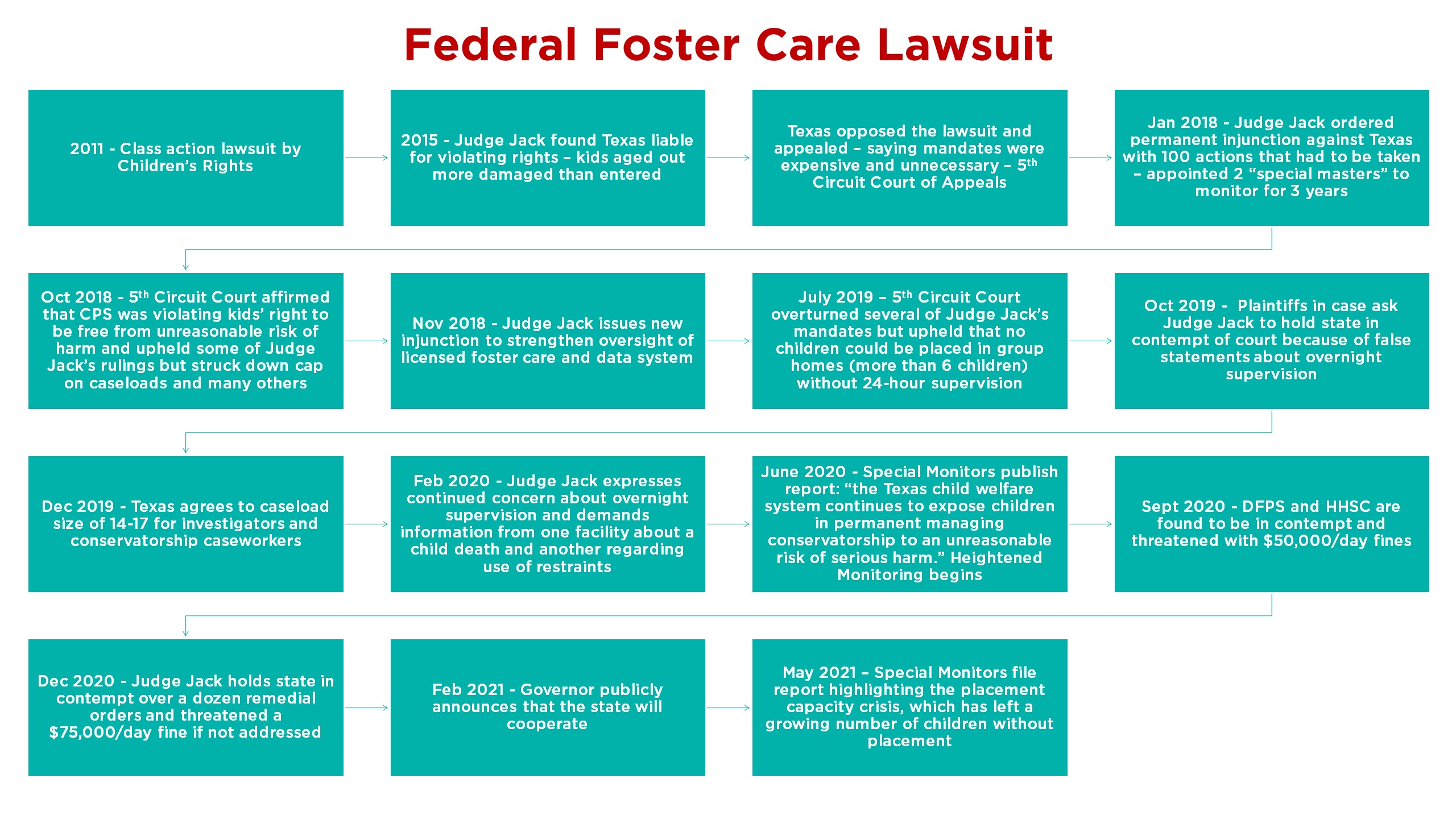
Federal Foster Care Lawsuit
A timeline of the foster care crisis in Texas.
Texas Must Make a Transformative Change in Child Protection and Foster Care
The Texas winter freeze and power outages are once-in-a-lifetime events that qualify as collective trauma for all of us. However, for Texans who were already in need or disproportionately affected by COVID-19, these events are compounding record-high levels of stress.
This crisis reminds us there is a clear and urgent need to put children and their families first this legislative session.
We need to ensure the immediate safety and protection of children who are survivors of child abuse and neglect. While events like the winter storm do not define families already under stressful circumstances, nor lead to child abuse, they do draw attention to the fact that thousands of children and families need our help and support more than ever. And we must work with the legislature on smart solutions to invest in upstream programs that prevent child abuse and neglect and mitigate the negative impact of events like these.
We are encouraged to see Gov. Greg Abbott’s vow to bring the state of Texas into compliance with the longstanding lawsuit against the Texas Foster Care system, recognizing that it is fundamental to ensuring the immediate safety and protection of the nearly 50,000 children who are survivors of child abuse and neglect and come through the state’s foster care doors every year needing help and protection. However, we know the foster care system has caused trauma that is on par, if not more significant, than what initially launched them into foster care.
The governor’s vow is a substantial promise and will require from our legislature this session an investment to the tune of $126 million — significant, yet worth every penny to protect the safety of our children. However, compliance with the lawsuit will not bring about transformational change. It is just the foundation and floor we must build upon.
An investment of $126 million to address the many issues in the lawsuit will not erase the trauma children in the foster care system have suffered. It will not support and protect children and families from reaching critical tipping points caused by unaddressed trauma and stress.

The State of Texas Families BEFORE COVID-19
How Texas ranks in child welfare areas and the ways to improve.

Real-time Child Abuse Data
How to ensure that accurate and timely child welfare data is available in Texas.

Health Services Initiatives (HIS)
A breakdown of how Health Services Initiatives provides federal funds to impact maternal and child health outcomes.
Family Connects
A breakdown of the benefits of Family Connects across Texas.