
Summary of how economic recessions, unemployment, increases in family violence, mental health, substance abuse, and parental stress have correlated to increases in child abuse and neglect.
Category: Uncategorized

Family First Prevention Services Act: A Shift in the Right Direction
How federal investment in ensuring children can remain safely at home rather than entering the foster care system can benefit Texas children.

Early Childhood Matters: Recommendations for Messaging and Policy for Early Childhood Brain Development
Critical data on policymakers’ knowledge and prioritization of early childhood brain development.

The Story of Early Childhood
Children that experience chronic adversity and trauma can affect their neurological and hormonal development.

10 Parent Strategies During COVID-19
10 strategies for parents and caregivers to thrive during the COVID-19 pandemic.

10 estrategias para los padres y cuidadores durante COVID-19
10 estrategias para padres de familia y cuidadores durante COVID-19.

TexProtects Update from the Frontlines
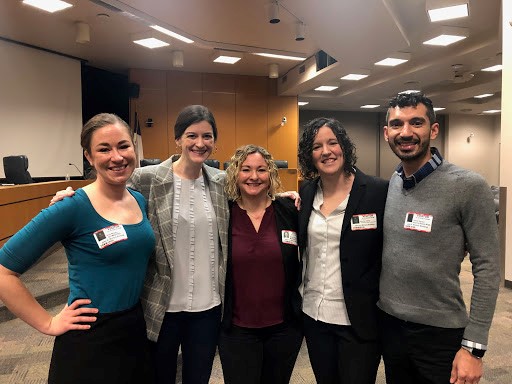
DFPS Hearing on the Family First Prevention Services Act
On Jan. 30, TexProtects joined advocates from around the state at the Department of Family and Protective Services’ (DFPS) public hearing on the Family First Prevention Services Act (FFPSA). In the 86th legislative session, TexProtects championed S.B. 355 which directed DFPS to develop a strategic plan for the implementation of FFPSA. DFPS published their Texas Child Welfare Changing Landscape Action Plan several months ago, and this hearing offered the public an opportunity to provide feedback toward their planning process and the opportunities presented by FFPSA.
As a refresher, FFPSA changes the way federal dollars can be spent:
- Title IV-E dollars previously could only be used for children once in substitute care, but now this funding is available for evidence-informed services for children and families to prevent removal. Specifically, these federal dollars intend to address the key drivers of child abuse and neglect: substance use, mental health, and lack of parenting skills. The idea behind this strategy is to provide the supports necessary to keep families safely together.
- For families who require legal intervention from CPS, funding will be designated for family-like settings and congregate care placements that provide higher quality services.
The provisions of FFPSA also aim to better support kinship caregivers and provide older youth in care with more supports as they transition into adulthood.
TexProtects provided testimony alongside our advocacy partners from Texas CASA, Texans Care for Children, Disability Rights Texas, National Association of Social Workers, Parents as Teachers, Nurse-Family Partnership (NFP), Nurturing Parenting, Center for Public Policy Priorities, and several community providers. In our testimony we emphasized the importance of getting the eligibility criteria right for these critical prevention services so that families have access to needed supports. We also discussed the importance of preserving funding for primary prevention efforts through Prevention and Early Intervention (PEI) initiatives such as Healthy Outcomes through Prevention and Early Support (HOPES) and NFP at DFPS and using the infrastructure already in place to expand services to higher risk families. Finally, we noted the importance of supporting kinship families and exploring the provisions of FFPSA that would allow further support of older youth in care.
We were glad to see such a great turnout at the hearing and the amount of meaningful, intentional recommendations provided for DFPS to consider. Texas’ deadline to implement the provisions of FFPSA by October 2021 is just around the corner, and we hope to see DFPS incorporate this feedback as they carry out their work.

OP-ED: Healthy Childhoods One of Many Ways to Prevent Violence
This op-ed was published in the Houston Chronicle, Corpus Christi Caller-Times, Longview News-Journal and Alice Echo News-Journal.
By Sophie Phillips, TexProtects CEO
Yet again, more mass shootings have our nation desperately searching for answers to difficult questions. How could they have been prevented? Some question whether prevention is within our reach.
This question sparks debate around issues such as the proliferation of guns in America, hateful political ideologies, violence in video games and movies, and mental health issues (further stigmatizing it), among many others.
Negative rhetoric is the matchstick sparking the combustion of destruction and prevents us from finding true solutions, including one I believe we have not brought into the fold: evidence-based prevention and early intervention programs in childhood that support families and build resiliency in children.
Science tells us there are commonalities behind the violent acts devastating our country beyond those currently debated.
In an August 4 op-ed in the Los Angeles Times, researchers Jillian Peterson and James Densley of The Violence Project studied every mass shooter in the past 53 years and identified four commonalities, the first of which caught my eye.
Peterson and Densley wrote, “the vast majority of mass shooters in our study experienced early childhood trauma and exposure to violence at a young age.”
Certainly, neither I nor Peterson and Densley suggest that children who experience severe trauma are destined to become mass shooters or otherwise engage in violent behavior.
However, exposure to multiple, prolonged, severe, and compounded events – including child abuse and neglect, living in a household with intimate partner violence, parental substance abuse, untreated mental health concerns, loss of a parent, bullying and more – have been identified in research as precursors to serious social, mental, and physical health problems later in life such as depression, suicide, substance abuse, and others if left untreated or without effective coping mechanisms.
One might be surprised at the large percentage of children that experience trauma. National research firm Child Trends analyzed data from the 2016 National Survey of Children’s Health and found that while 49% of Texas children have experienced at least one early adversity, 12% (nearly 900,000) experienced three or more, excluding child abuse (but including being a victim of violence), making the likely impact much more severe.
The solutions aren’t necessarily difficult. Research has shown just one loving adult in a child’s life can buffer trauma’s impact.
Additionally, programs and interventions exist that work with families to not only prevent traumas but also mitigate the effects. These include voluntary home visiting programs, high quality childcare, parenting training and support, access to quality healthcare, treatment of mental health and substance abuse concerns, and domestic violence prevention.
Let me be clear: this is not about labeling children or flagging potential shooters because of early trauma or mental health concerns.
Rather, it’s an effort to invest in our most precious generation, when children’s brains experience the most development. Every child deserves to be strong, safe and secure. By investing in prevention, we create a foundation in which children are resilient and have supports in place to build healthy lives.
The organization I lead – TexProtects, the Texas chapter of Prevent Child Abuse America – worked hard in the most recent Legislative Session educating lawmakers on the detrimental effects of adverse childhood experiences (ACEs). Along with other advocacy partners, we pushed for development of a statewide strategy to prevent and mitigate ACEs impacts by building resiliency in kids. Unfortunately, despite strong House support, the legislation died in the Senate in the final days of session.
I don’t know what the perfect solution is to preventing violence in our nation – there probably isn’t one, as any individual violent event can be pinned to multiple causes. However, I do know that the earlier we intervene the better, and prevention of early childhood trauma and treatment later in life should be two of many strategies.
Prevention is absolutely within our means to address and childhood is the earliest point possible.
Sophie Phillips is CEO of TexProtects. TexProtects’ study of Adverse Childhood Experiences is at bit.ly/acesuncovered.
How Did Behavioral Health & Trauma Fare in the 86th Texas Legislature?
DID YOU KNOW?
- Behavioral health is a term used to refer to the connection between physical and mental health and a person’s behavior
- At least 25% of Texas children have experienced multiple adversities that are likely affecting their ability to succeed at school.
- Half of all mental health conditions have presented before age 14.
- 68% of removals in 2017 were related to parental substance use.
Welcome to the fourth and final part of our look at how child protection legislation fared in the 86th Texas Legislature. We began this series in May with our top-priority bills, followed by an examination of prevention and early intervention legislation and child protection systems.
Today’s post looks at bills affecting behavioral health and trauma.
Behavioral Health and Trauma Background
Challenges with mental health can be both a cause and a consequence of early childhood adversity. Therefore, both prevention and healing require adequate systems of care to ensure children and their parents have access to mental health care and services that incorporate trauma-informed approaches that can be both healing and protective.
In the 86th Legislative Session and in the wake of the shooting at Santa Fe High School and Hurricane Harvey, the momentum around school safety and trauma offered an opportunity to take a meaningful look at the capacity issues in our communities and the ways in which our schools might better facilitate access to care and incorporate strategies that allow children with a trauma history to engage productively and thrive.
Schools are often the first point of contact for students with behavioral health issues, and undiagnosed mental health conditions can negatively impact the academic performance, behavior, and school attendance of students.
Like all diseases, care works best with early intervention when symptoms are less severe and there is less need for more intense treatments, specialists, and medications. However, most schools lack adequate training or staff to address student needs, and most communities in Texas have a shortage of mental health and substance use providers to which families and children might be referred for treatment.
Stress and trauma, both acute (e.g. Hurricane Harvey) and chronic (e.g. abuse/neglect), can place children in “fight or flight” mode. This course overwhelms the brain, including its stress hormone cortisol, and impairs a child’s ability to self-regulate and engage in higher-order thinking. These adverse childhood experiences can disrupt normal development and lead to a higher risk of both mental challenges (e.g. depression and suicidality) and physical challenges (e.g. heart disease and stroke) throughout the lifespan. However, the negative impacts can be mitigated if students are equipped with protective factors through healthy relationships, safe environments and access to care, when needed.
Behavioral health care investments and programs are spread across state agencies including:
- Health and Human Services Commission
- Department of State Health Services
- Department of Family and Protective Services
- Texas Department of Criminal Justice
- Texas Juvenile Justice Department
- Texas Education Agency
- Texas Department of Housing and Community Affairs
- Texas Veterans Commission
- Texas Workforce Commission
In addition to state entities, behavioral health services are provided at the local level in jails, hospital emergency departments, schools, local mental health authorities, various nonprofit agencies, public health clinics and other settings, with people frequently moving between service systems.
The goal of behavioral health policies is recovery. Recovery is an ongoing process that enables individuals to mitigate the negative effects of their challenges and trauma and become empowered to make beneficial choices, engage in healthy relationships and create a successful life.
Behavioral Health in the 86th texas legislature
Top-Priority Bills Passed
House Bill 1 – The General Appropriations Act
Champions: Sen. Jane Nelson and Rep. John Zerwas
HB 1 funding for behavioral health includes programs or services directly or indirectly related to the research, prevention, or detection of mental disorders and disabilities, and all services necessary to treat, care for, supervise, and rehabilitate persons who have a mental disorder or disability, including persons whose mental disorders or disabilities result from alcoholism or drug addiction. Funding for behavioral healthcare to support programs at 23 state agencies and associated costs within Medicaid and the Children’s Health Insurance Program total $7.8 billion for 2020-2021. Some of these services include:
- funding for inpatient client services at state hospitals and community hospitals;
- deferred maintenance projects at state mental health hospitals;
- outpatient services provided through local mental health authorities and local behavioral health authorities;
- substance abuse prevention, intervention, and treatment services for adults and children;
- mental healthcare and substance abuse treatment for incarcerated offenders;
- mental healthcare services for veterans; and
- Mental Health Care Consortium.
Some notable increases in investment are found in the table below:
| Behavioral Health | 2020-21 Base Budget | Additional Investment and House Bill 1 FINAL | % Difference |
|---|---|---|---|
| Department of Family and Protective Services for Purchased Client Services | $52.8 million | $24.4 million; $77.3 million total | 46.2% + |
| Health and Human Services Commission | $3 billion | $303.7 million; $3.3 billion total | 10.3% + |
| University of Texas Health Science Center at Tyler | $8 million | $5.5 million; $13.5 million total | 68.3% + |
| * Higher Education Coordinating Board | $0 | $100 million total | 100% + |
| Department of Criminal Justice | $515.8 million | $9.8 million; $525.6 million total | 1.9% + |
| Juvenile Justice Department | $175.5 million | $3.6 million; $179.1 million | 2.0% + |
*Funds available to the newly created Texas Mental Health Consortium to be distributed to health-related institutions of higher education for expanding the mental health workforce and for psychiatric fellowships. The Consortium is created through SB 11.
Safe and Healthy Schools Initiatives
Funding for school safety programs includes an additional $343.5 million to expand children’s community mental health, grants to mental health professionals at local mental health authorities provided by HB 19, school safety infrastructure enhancements, a new school safety allotment provided by SB 11; school district reimbursement of post-disaster expenditures, and customized school safety programming and other services.
HB 18 – Trauma Informed Schools
Champions – Rep. Four Price & Sen. Kirk Watson
HB 18 will increase awareness of mental health among public school students and educators, reduce the stigma of mental health issues, and provide more resources on mental health and substance abuse for educators. Through integration in district policy, staff training and continuing education requirements, HB 18 ensures that school staff are adequately trained to understand the impact of trauma on students, implement strategies to minimize the negative impacts, and maximize academic opportunities in an environment of safety and connection, making referrals when needed and with parental consent.
Other Priority Bills Passed
TexProtects Goal – Address students’ mental health needs by increasing access to care and implementing trauma-informed approaches in school environments
House Bill 19 – Rep. Four Price / Sen. Kirk Watson
HB 19 requires local mental health authorities to employ a nonphysician mental health professional to serve as a mental health and substance use resource for school districts. These professionals will act as a resource for school district personnel by
helping increase awareness of mental health and co-occurring mental health and substance use disorders, assisting with the implementation of mental health or substance use initiatives under state law or agency rules, and ensuring awareness of certain recommended programs and practices and treatment programs available in the district. The bill will also require the professionals to help personnel facilitate on a monthly basis training regarding mental health first aid, the effects of grief and trauma, and prevention and intervention programs that will help students cope with pressure to use illicit substances.
HB 811 – Rep. James White / Sen. royce West
HB 811 requires that school districts take into consideration whether a child is in the conservatorship of the state or is homeless when making decisions concerning disciplinary actions including suspension, removal to a disciplinary alternative education program, expulsion or placement in a juvenile justice alternative education program, regardless of whether the decision concerned a mandatory or discretionary action.
HB 906 – Rep. Senfronia Thompson / Sen. Beverly Powell
HB 906 establishes the Collaborative Task Force on Public School Mental Health Services to study and evaluate state-funded mental health services provided at school districts or open-enrollment charter schools. The task force will also evaluate mental health services training provided to educators and the impact of the provided mental health services. The task force will share its findings and recommendations with the governor, lieutenant governor, House speaker, and the TEA by Nov. 1 in each even numbered year until 2025.
SB 11 – Sen. Larry Taylor / Rep. Greg Bonnen
SB 11 is the 86th Legislature’s answer to increasing school safety. It includes many provisions related to safety, security, and emergency preparedness and response. In addition, the bill requires a trauma-informed care policy to address methods for increasing staff and parent awareness of trauma-informed care and the implementation of trauma-informed practices and care by district and campus staff. The policy will also address available counseling options for students affected by trauma and grief. In addition, SB 11, amended with language from Sen. Nelson’s SB 10, creates the Texas Child Mental Health Care Consortium to leverage the expertise and capacity of the health-related institutions of higher education in order to address urgent mental health challenges and improve the mental health care system in this state in relation to children and adolescents.
SB 712 – Sen. Eddie Lucio Jr. / Rep. Morgan Meyer
SB 712 provides guidance by naming extreme aversive interventions that may not be used on any student, under any circumstances. By clarifying what behavior modification techniques are prohibited and providing direction on positive alternatives. SB 712 will improve the safety and wellbeing of students, especially those with special needs. The companion to this bill is HB 3630.
TexProtects Goal – Improve access to mental health care, substance use prevention and treatment, and evidence-based treatments and approaches for survivors of childhood adversity
HB 2813 – Rep. Four Price / Sen. Jane Nelson
HB 2813 ensures the continued existence of the Texas Statewide Behavioral Health Council by codifying it in statute. The council is charged with developing and monitoring the implementation of a five-year statewide behavioral health strategic plan and developing a biennial coordinated statewide behavioral health expenditure proposal. This work helps state agencies coordinate and reduces duplication of services, improves the quality and accessibility of services, and saves taxpayer dollars.
SB 429 – Sen. Eddie Lucio, Jr. / Rep. Eddie Lucio III
SB 429 requires the Statewide Behavioral Health Coordinating Council, under the direction of the Health and Human Services Commission (HHSC), to develop a comprehensive plan to increase and improve the workforce in Texas to serve individuals with mental health and substance use issues. By Sept 1, 2020, HHSC will need to start implementing the plan.
SB 633 – Sen. Lois Kolkhorst / Rep. William Lambert
SB 633 requires HHSC to form local mental health authority (LMHA) groups in rural areas and develop a mental health services development plan for each group. Public mental health services are primarily provided through HHSC contracts with LMHAs. These entities provide or arrange crisis, community mental health, and substance use services; jail assessments; and services for individuals with intellectual and developmental disabilities. This bill increases service access, especially in rural counties, by requiring regional coordination and planning to reduce government costs and negative impacts to individuals in crisis.
SB 821 – Sen. Jane Nelson / Rep. Four Price
SB 821 amends a children’s advocacy center’s duties and a multidisciplinary team’s membership and response. These centers assess victims of child abuse and their families to determine their need for services related to the investigation of child abuse and provide those services. This bill updates the Family Code to more clearly align statute with current practices, standards, services, and operations of children’s advocacy centers, increase accountability, and strengthen access to services.
SB 1177 – Sen. JosÉ Menéndez / Rep. toni Rose
SB 1177 permits a Medicaid Managed Care Organization to offer medically appropriate, cost-effective, and evidence-based services from a list approved by the state Medicaid managed care advisory committee and included in the contract in lieu of mental health or substance use disorder services specified in the state Medicaid plan. This will provide flexibility to providers and access to evidence-based and cost-effective services without additional cost to the state.
SB 1564 – Sen. Royce West / Rep. Stephanie Klick
SB1564 aligns Texas Medicaid policy with federal law by using the federal definition of a “qualifying practitioner.” This will allow more practitioners to prescribe and be reimbursed for buprenorphine, a common medication-assisted treatment for substance use disorders. Currently, a large number of Texans who have a substance use disorder do not have access to providers who are able to prescribe them the common opioid antagonist buprenorphine.
Missed Opportunities for Behavioral Health and Trauma
Creating the Texas Mental and Behavioral Health Research Institute

Through HB 10, this research institute would have been able to lead the charge on child and adolescent mental health by funding research, increasing awareness of best practices, and fostering statewide collaborations. This institute would coordinate with the Mental Health Care Consortium to accelerate community access to information, treatments, and training related to behavioral health and substance use. The related HJR 5 would have created a revenue source for this research and increased access to care.